
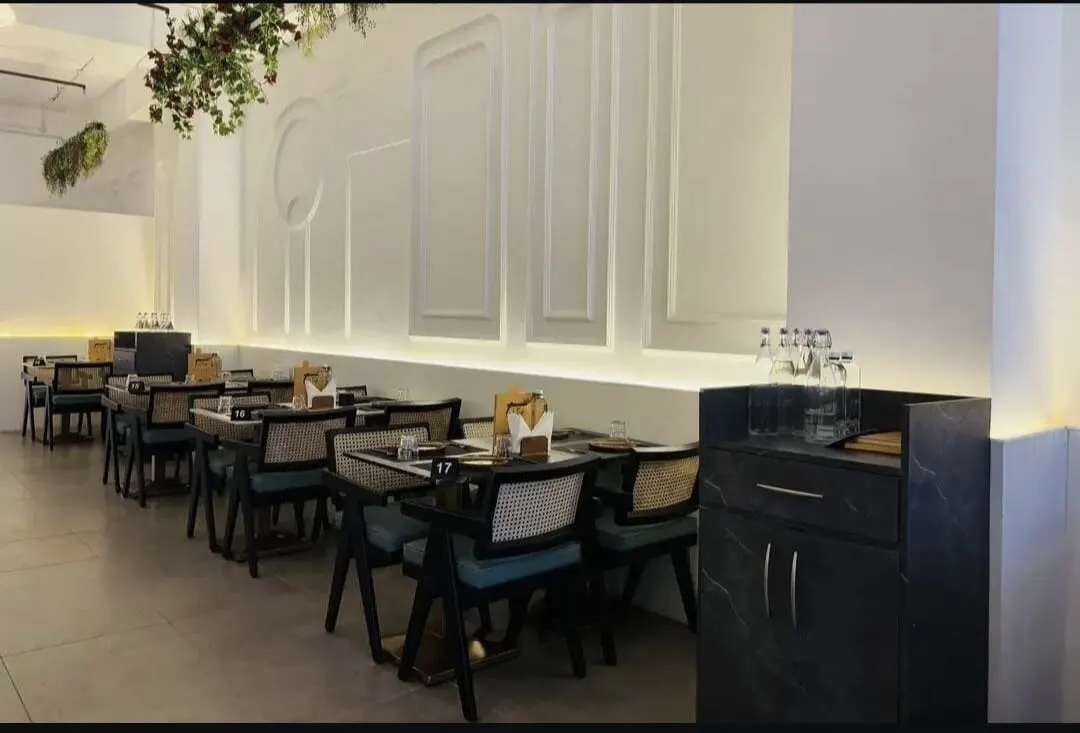
Opening a restaurant from scratch means betting on a location, a concept, and a customer base that don't exist yet. Investing in a restaurant that's already running removes that uncertainty from the equation — the covers are already coming through the door, the kitchen already works, and the only real question is whether the numbers hold up to scrutiny. Hygiene is also a legal baseline: FSSAI's Schedule 4 requires food premises to be located in a sanitary place, kept clean, adequately lit and ventilated, with floors, walls and ceilings that are smooth and easy to clean (FSSAI Schedule 4).
Investing in a running restaurant business means buying a stake in — or full ownership of — an operation that's already generating revenue, giving you real performance data to evaluate before committing capital. That's fundamentally different from a franchise launch or a from-scratch concept, where projections are the best you get until the doors actually open.
Why Investors Choose Running Restaurants Over New Concepts
A new restaurant concept, however well-planned, is still a hypothesis — about location, pricing, menu, and demand — until it's tested in the market. A running restaurant has already answered those questions. It has a customer base, a track record of covers per day, and real cost structures you can examine line by line. That doesn't eliminate risk entirely, but it replaces guesswork with data, which is exactly what disciplined investors look for.
- Running restaurant: Real revenue, real costs, real customer base — lower execution risk
- New concept: Higher potential upside, but location, pricing, and demand are still unproven
- Partnership structures let you get exposure to a running business without a full buyout
Full Buyout vs Partnership Investment — What's the Difference?
Not every restaurant investment means taking over the whole business. Two structures are common:
| Structure | What It Means | Best For |
|---|---|---|
| Full buyout | Investor acquires the entire business and takes over operations | Investors who want full control and are ready to run the business |
| Partnership investment | Investor buys a minority or significant stake (commonly 20-49%); existing owner stays involved | Investors who want exposure to a running business without operational takeover |
A partnership structure in particular reduces handover risk — the person who built the restaurant's reputation, supplier relationships, and staff culture stays in the picture, while the new partner brings capital and often a fresh perspective on growth. This is the structure behind opportunities like Thai Asian Food Restaurant's Ahmedabad partnership investment, where the owner is offering a 30-49% stake rather than a full sale.
What to Check Before You Invest
A restaurant's menu and ambience are the easy part to evaluate. The financial and operational details take real work, and this is where most first-time restaurant investors under-invest their time.
- Revenue and profitability trend — is the restaurant growing, flat, or declining month over month, and is it currently profitable or still working toward breakeven?
- Food and labour cost percentages — these are the two biggest controllable cost lines in any restaurant, and they reveal a lot about operational discipline.
- Lease terms and remaining tenure — a great restaurant with two years left on an unrenewable lease is a very different investment than one with a decade of security.
- Staff retention and key person dependency — does the business run on a system, or does it depend heavily on one chef or manager who could leave?
- Brand consistency across locations — if the restaurant is part of a multi-location brand, do the other locations perform similarly, or is this one an outlier?
Be cautious of any restaurant investment opportunity where the owner won't let you visit the actual location or won't share financial statements before you commit meaningful time or money. A restaurant genuinely running above breakeven has little reason to hide its numbers from a serious investor. One quick check: anyone can look up a business's GST registration — legal name, trade name, registration date, constitution and principal place of business — on the GST portal's Search Taxpayer tool without logging in (GST portal).
How Site Visits and Financial Review Should Work
Before any capital changes hands, a serious restaurant investment process should let you do two things without resistance: visit the restaurant in person, ideally during service hours to see real footfall and operations, and review the actual financial statements rather than a verbal summary of them. Both of these are standard, reasonable requests — an owner who's confident in the business will accommodate them, not delay or deflect.
This is exactly the posture behind well-structured opportunities on Takeover24, Rivavya's business buying and selling platform — genuine listings are built around the expectation that a serious investor gets to see the real numbers and the real restaurant before finalising anything.
How Partnership Investments Typically Get Structured
Once due diligence is done and both sides want to move forward, a partnership investment typically works through a sequence: agree on the stake percentage and valuation, agree on decision-making rights (who controls what, especially for a minority stake), formalise the partnership through legal documentation, and define an exit or buyout mechanism for the future. None of this needs to be complicated, but all of it needs to be in writing — verbal understandings are where restaurant partnerships most often break down later.
What If You and the Owner Disagree Down the Line?
A well-structured partnership agreement should anticipate disagreement before it happens, not attempt to resolve it after emotions are already involved. Common friction points in restaurant partnerships include disputes over reinvestment versus profit distribution, disagreement on menu or pricing changes, and differing views on when and how to expand to a second location. None of these are unusual — they're the ordinary tensions of running a business with more than one decision-maker. What matters is whether the partnership agreement specifies, in writing, how such disagreements get resolved: a defined voting or veto structure for major decisions, a clear process for valuing the business if one partner wants to exit, and ideally a mediation or arbitration clause rather than an assumption that court is the fallback. Investors who skip this conversation because the relationship feels amicable during due diligence are the ones most likely to regret it later.
Where to Find Genuine Restaurant Investment Opportunities
The hardest part of restaurant investing for many first-time investors isn't evaluating a deal — it's finding a genuine one in the first place. Restaurant owners looking for a partner rarely advertise it publicly, for the same reason most businesses don't announce they're for sale: it can unsettle staff, suppliers, and customers if word gets out prematurely. This is where a facilitation platform matters — Takeover24 connects investors with business owners who are genuinely ready for a partner, with initial enquiries routed through Rivavya to protect confidentiality on both sides until there's real mutual interest.
Looking for a Real Restaurant Investment Opportunity?
Explore live business opportunities on Takeover24, including a profitable restaurant partnership opportunity in Ahmedabad.
Explore Takeover24 View Thai Asian Food Restaurant OpportunitySources
- Search Taxpayers using GSTIN/UIN — User Manual — GST Portal, Government of India.
- Schedule 4 — General Hygienic and Sanitary Practices to be followed by Food Business Operators (FSS Licensing & Registration Regulations, 2011) — Department of Food Safety, Government of NCT of Delhi.
Frequently Asked Questions
Conclusion — Data Beats Guesswork
The core appeal of investing in a running restaurant is simple: you're evaluating a business with a track record instead of a business plan. That doesn't remove the need for careful due diligence — it makes that due diligence more meaningful, because there's real data to examine rather than projections to trust. Our due diligence checklist walks through exactly what to review before committing, and Takeover24 is where to start looking for a genuine opportunity.
Niraj Kumar Patel
Niraj Kumar Patel founded Rivavya in 2023 in Nadiad, Gujarat. Rivavya provides franchise consulting, digital marketing, and Takeover24 business buying and selling facilitation for investors and business owners across Gujarat and India. Address: 12/1360/15 Panchratna Building, Vallabhnagar Chokdi, Pij Road, Nadiad 387002. Phone: +91 95746 04141.